


 Complete Your
Collection
Complete Your
Collection


 Secure Checkout
 30-Day Guarantee

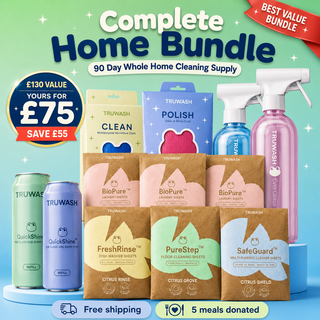
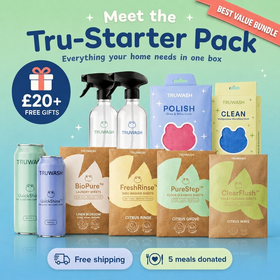


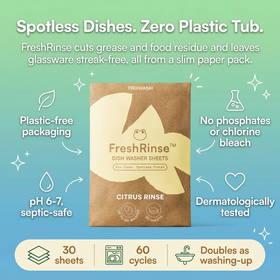


You've seen them on Instagram. Tucked inside influencer boxes. Stacked in the "eco" aisle. Thin little sheets that promise to replace the 5-litre plastic jug under your sink.
But do laundry sheets actually work as well as liquid detergent? Or are you paying a premium for a placebo that leaves your whites looking grey?
We're a small family business from Northern Ireland that makes laundry sheets — so yes, we're biased. But we're also the people who'd lose sleep if ours didn't genuinely clean. So here's the honest comparison, numbers and all.
What are laundry sheets, anyway?
A laundry sheet is a pre-dosed strip of concentrated detergent, compressed into a dry, paper-thin format. You drop one (or half, or two) straight into the drum of your washing machine. The sheet dissolves as the wash starts, releasing surfactants, enzymes, and — in the better ones — a bit of fabric softener.
No measuring. No sticky cap. No 70% water shipped in plastic halfway across the country.
The concept isn't new. What is new is that the latest formulations (ours included) actually clean properly — which wasn't reliably true of the first generation you might have tried in 2020.
Laundry sheets vs liquid detergent: the honest comparison
Let's put them head-to-head on what actually matters.
| Factor | Laundry sheets | Liquid detergent |
|---|---|---|
| Cleaning power | Strong on everyday dirt and light stains. Enzymes tackle protein and food stains well. | Slightly more aggressive on oil and mud, particularly in cold water. |
| Cost per wash (UK) | ≈ 25–45p per wash for a good sheet | ≈ 18–35p per wash for mid-range liquid |
| Plastic waste | Plastic-free if packaged in card (ours is) | Roughly 60g of plastic per 5-litre bottle — more if you buy smaller packs |
| Weight & storage | A pack fits in a kitchen drawer and weighs ≈ 120g for 30 sheets | A 5-litre jug weighs ≈ 5.5kg and hogs cupboard space |
| Skin sensitivity | Better for sensitive skin if the sheet is dermatologically tested and pH-balanced | Varies hugely — many contain optical brighteners that can irritate |
| Cold-water performance | Good with a quality sheet; may need two for heavy loads at 20°C | Generally strong, especially the “bio” liquid formats |
| Carbon footprint | Significantly lower — less water shipped, less plastic produced | Higher — water is 70–90% of the product by weight |
| Septic safety | Septic-safe if marked (ours is) — fully biodegradable | Most are septic-safe, though phosphates and optical brighteners are a grey area |
The honest summary: for everyday family laundry, a good sheet matches liquid on cleaning and beats it on convenience, plastic waste, and storage. Where liquid still wins is on stubborn oil stains and mechanic's-grade mud — for those, pre-treat or add a second sheet.
Do laundry sheets actually work? Our honest answer
Yes — if you buy a decent one. The market is split into two camps right now:
- Budget imports. Often sold on Amazon or TikTok Shop. Low surfactant content. Leave clothes feeling "washed but not clean." This is where "laundry sheets don't work" myths come from.
- Properly formulated sheets. Contain enough active detergent (typically 18–25% by weight), real enzymes, and a softening agent. These clean as well as mid-tier liquid.
If you've tried sheets before and were disappointed, it's likely you had the first kind. The way to tell the difference is to look at the label: if it doesn't disclose surfactant content, skip it. If it claims "dermatologically tested" and "OECD biodegradable," that's usually a sign someone's done the lab work.
What makes a good laundry sheet
If you're switching from liquid, here's the buying checklist we'd use ourselves.
The essentials
- 3-in-1 formulation — detergent, stain remover, and fabric softener in a single sheet. Otherwise you're still buying add-ons.
- pH 6–7 — gentle on fabrics, colours, and sensitive skin. Anything higher than 8 will wear out darks over time.
- Plastic-free packaging — the whole point is to get plastic out of the wash. Card packaging is the gold standard.
- OECD biodegradable — means it breaks down in wastewater, not just in theory.
- Dermatologically tested — essential if anyone in the house has eczema or sensitive skin.
- Septic-safe formula — non-negotiable if you're rural or on a private system.
The nice-to-haves
- Scent options including a fragrance-free version (more important than people realise — synthetic fragrance is the single most common irritant in laundry).
- UK-made or UK-shipped — carbon cost matters, especially when the alternative is flying sheets in from China.
- Half-sheet dosing for small loads so you're not over-washing.
Our BioPure Laundry Sheets were designed against this exact checklist, which is why we're comfortable recommending them — 30 sheets per pack, up to 60 washes, pH 6–7, dermatologically tested, septic-safe, 100% plastic-free, and available in Linen Blossom, Summer Bloom, and Fragrance Free.
How to use laundry sheets
Genuinely simpler than liquid. No measuring, no mess.
- Drop the sheet directly into the drum, before you add clothes. Not the detergent tray — the tray doesn't get enough water for the sheet to dissolve properly.
-
Use the right dose:
- Small load or delicates: half a sheet
- Regular load: one full sheet
- Heavily soiled or sports kit: two sheets
- Wash as normal. Sheets dissolve in hot and cold water — 30°C works perfectly for most loads. For whites or heavy soil, 40°C gives a cleaner finish.
One quirk worth knowing: if you're on very hard water (most of the south of England), the sheet may leave a fine residue on the drum door after the wash. A quick wipe with a damp cloth clears it, and it doesn't affect the clothes.
Who should switch — and who shouldn't
Switch if:
- You want less plastic waste without changing how you wash.
- Your storage is tight and you're sick of heaving a 5-litre jug about.
- You (or your kids) have sensitive skin and you've tried the "free and gentle" liquids without much success.
- You like the idea of a simpler routine — drop, close, go.
Maybe don't switch if:
- You work in a trade where your kit is daily-destroyed — oil, grease, mud. Liquid plus a dedicated pre-treat is still better for that.
- You wash exclusively on cold cycles with very short programmes (< 30 mins). Sheets need a bit of time to dissolve fully.
The verdict
Laundry sheets aren't a gimmick anymore. The good ones clean as well as liquid detergent, cost about the same per wash, and cut out an enormous amount of plastic, water weight, and storage hassle.
The catch is the “good ones” part. The category has cheap imitators, and one bad experience is enough to put people off for years.
If you've been sitting on the fence, try a single pack of a properly formulated sheet on your normal weekly wash. You'll know within a week.
Try BioPure Laundry Sheets — 30 sheets, up to 60 washes, £15
Frequently asked questions
How many laundry sheets per load should I use?
One sheet for a regular load (6–8kg), half a sheet for a small or delicate load, two for heavily soiled or sports kit. That's it.
Are laundry sheets safe for sensitive skin?
The dermatologically tested, fragrance-free ones generally are — and often kinder than liquid detergents, which frequently contain optical brighteners and synthetic fragrance. Always patch-test if anyone in the house has severe eczema.
Do laundry sheets work in cold water?
Yes. A quality sheet dissolves cleanly at 20°C and cleans effectively. Very short cold cycles (under 30 minutes) can leave trace residue — either use a normal length cycle or bump up to 30°C.
Are laundry sheets septic-safe?
Only if the pack says so. Look for an explicit “septic-safe” claim plus OECD biodegradable certification. Our BioPure sheets are both.
Will laundry sheets damage my washing machine?
No. They dissolve completely, leave less residue than many liquid detergents, and don't contain the build-up causes (phosphates, optical brighteners) that fur up drum seals over time.
Can I use laundry sheets on delicates and wool?
Yes — use half a sheet, wash on your delicates cycle, and skip fabric conditioner (sheets already include a softener). Avoid on silks labelled "dry clean only."
Have a laundry question we didn't cover? Email us — we answer everything personally. We're a family of three; there isn't a support team.


